Blog
Why Indian Gravies Taste Better When Cooked Low and Slow

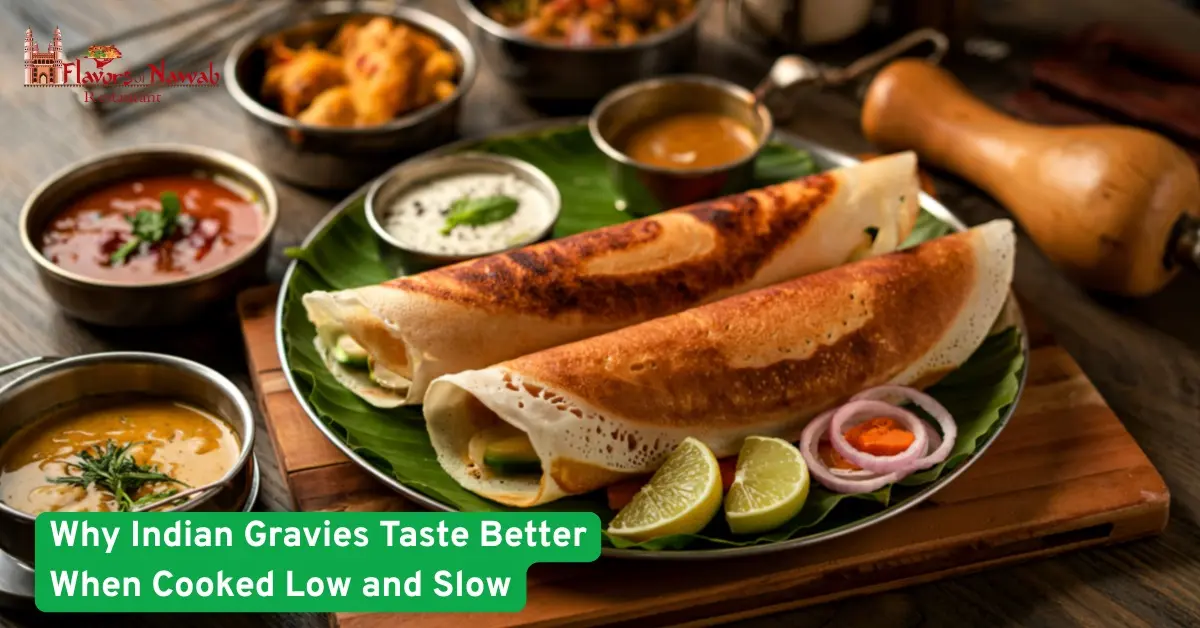
If you think a high-heat boil is the shortcut to a perfect curry, you are likely serving a dish that lacks its true culinary soul. Authentic Indian cuisine isn’t just about the ingredients; it is a meticulous dance with time that transforms raw spices into liquid gold. Understanding Why Indian Gravies Taste Better When Cooked Low and Slow is the key to unlocking that deep, multi-layered profile you find in the finest royal kitchens. You are here because you want to move beyond “instant” flavors and understand the true craftsmanship of a slow-simmered meal. Research in food chemistry suggests that slow cooking at lower temperatures can increase the extractability of polyphenols and essential oils from spices by up to 40%, resulting in a significantly more complex flavor profile than rapid boiling.
The Chemistry of the Simmer: Building Flavor Layers
When we talk about traditional Indian cooking, we are discussing a process called Bhuna—the art of sautéing and simmering. This isn’t just for show; it is a scientific necessity for achieving the perfect consistency and aroma.
Spice Tempering and Essential Oils
Indian spices like cardamom, cloves, and cinnamon contain volatile oils that are heat-sensitive. Under intense, aggressive heat, these oils can burn, turning bitter. However, when you explore Why Indian Gravies Taste Better When Cooked Low and Slow, you find that gentle heat allows these oils to infuse the fat (ghee or oil) gradually. This creates a “base note” of flavor that lingers on the palate rather than a sharp, fleeting hit of spice.
The Maillard Reaction and Caramelization
Most Indian gravies begin with a base of onions, ginger, and garlic. High heat simply browns the outside of an onion, leaving the inside raw and pungent. Slow cooking allows the natural sugars in the onions to caramelize deeply. This provides a natural sweetness that balances the heat of the chilies, creating that “umami” richness that defines world-class gravies.
Tenderization of Proteins
Whether it is lamb, goat, or chicken, connective tissues like collagen require time and gentle heat to transform into gelatin. A rapid boil toughens the muscle fibers, resulting in chewy meat. Slow simmering ensures the meat is “fork-tender,” absorbing the gravy while releasing its own juices back into the sauce for a symbiotic flavor exchange.
Texture and Consistency: The Visual Proof
A hallmark of a properly cooked Indian dish is the separation of oil—often called the Tarka or the “oil coming to the top.” This only happens when the moisture has been slowly evaporated to the point where the fats separate from the spice paste.
- Emulsification: Slow cooking helps fats and liquids emulsify properly, preventing the “watery” edges often seen in rushed curries.
- Depth of Color: The vibrant reds and deep browns of a Rogan Josh or Bhuna Gosht are developed through the slow oxidation of spices and fats.
- Aroma Retention: Low heat keeps the aromatic compounds inside the pot rather than letting them evaporate into the steam and disappear.
This patient approach is fundamentally Why Indian Gravies Taste Better When Cooked Low and Slow; it creates a velvety texture that coats the back of a spoon and satisfies the soul.
Frequently Asked Questions
1. Does slow cooking make the food spicier?
Actually, it mellows the “bite” of raw chilies and integrates the heat into the overall flavor, making the spice profile feel more balanced rather than just “hot.”
2. Can I use a slow cooker to get the same results?
While a slow cooker is helpful, the traditional method involves an open heavy-bottomed pot (like a Handi) which allows for better reduction and caramelization than a sealed slow cooker.
3. How long should a typical Indian gravy simmer?
For a truly deep flavor, a gravy should simmer for at least 45 minutes to 2 hours, depending on the type of meat and the desired thickness.
4. Why does my curry taste “raw” even after boiling?
If you don’t sauté the spices and aromatics slowly at the start, the “raw” smell of the ginger, garlic, and turmeric remains, even if the liquid is hot.
5. Is slow cooking healthier?
Yes. Cooking at lower temperatures helps retain many heat-sensitive nutrients and prevents the formation of harmful compounds associated with charred or burnt food.
Why Choose Flavors of Nawab?
At Flavors of Nawab, we treat time as our most precious ingredient. We don’t believe in the modern “fast food” approach to ancient recipes. Our kitchen honors the heritage of the Nizams and Nawabs, where dishes were traditionally cooked overnight in sealed copper vessels.
We pride ourselves on our authenticity and the patience required to perfect every batch. By understanding Why Indian Gravies Taste Better When Cooked Low and Slow, we ensure that every spoonful you enjoy at Flavors of Nawab carries the weight of history and the richness of true slow-cooked perfection. Our commitment to quality means we never cut corners, using only premium spices and the freshest meats to create a dining experience that feels like a royal invitation.
Savor the Masterpiece
The difference between a good meal and an unforgettable one is the patience of the chef. Now that you know the secrets behind the simmer, it’s time to experience the results of a kitchen that refuses to rush.
Ready for a royal feast? Visit Flavors of Nawab today to experience the deep, authentic taste of slow-cooked Indian excellence!