
Blog
How Indian Food Achieves the Perfect Balance of Flavor

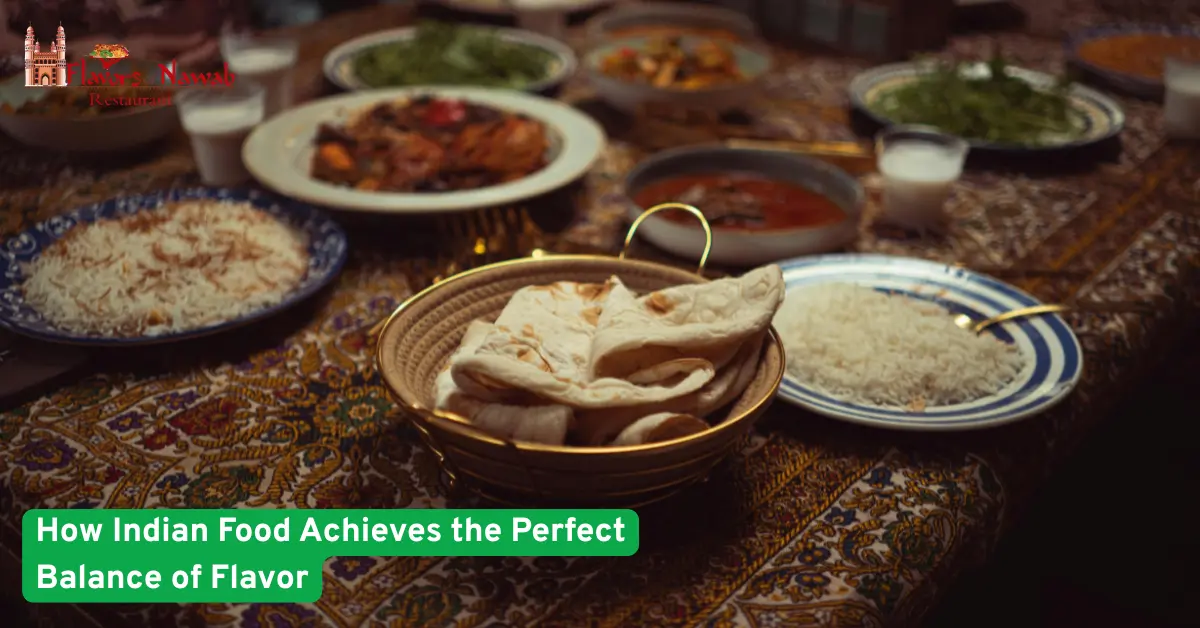
Walk into any authentic Indian restaurant and your senses are immediately engaged before you even sit down. The warm fragrance of cumin, the subtle sweetness of cardamom, and the earthy depth of turmeric mingle in the air — a preview of the layered complexity waiting on the plate. Indian cuisine is widely regarded as one of the world’s most sophisticated culinary traditions, and for good reason: it achieves a remarkable harmony of six distinct flavor profiles, woven together through centuries of technique, trade, and tradition.
But what exactly is the secret behind Indian food’s legendary depth of flavor? How does a single dish manage to be simultaneously spicy and cooling, tangy and rich, earthy and aromatic? The answer lies in a combination of ancient philosophy, masterful spice-blending, cooking technique, and a deep respect for balance.
The Six Tastes: India’s Flavor Philosophy
Long before modern nutritional science, Ayurveda — the ancient Indian system of holistic health — identified six essential tastes (rasas) that every well-rounded meal should contain: sweet, sour, salty, pungent, bitter, and astringent. This is not merely poetry; it is a sophisticated framework for achieving nutritional completeness and digestive harmony.
Indian cooking works to include as many of these tastes as possible within a single meal — often within a single dish. A classic dal, for instance, contains the earthiness of lentils (astringent), the brightness of lemon (sour), the warmth of chili (pungent), and the depth of sautéed onions (sweet) all at once. This is not accidental — it is intentional design, refined over thousands of years.
The Architecture of a Masala
At the heart of Indian flavor-building is the masala — a blend of spices that forms the aromatic foundation of almost every dish. Unlike Western cooking where herbs and spices are often used individually, Indian cuisine layers them in a deliberate sequence, each one added at a precise moment to extract its full potential.
The process typically begins with whole spices — mustard seeds, cumin, cinnamon, cardamom — tempered in hot oil or ghee. This technique, called tadka or tarka, causes the spices to bloom, releasing fat-soluble aromatic compounds into the cooking medium. These flavors then permeate every ingredient that follows. Ground spices — coriander, turmeric, chili — are added next, often with onion and tomato, creating a thick, flavor-dense base. The result is a layered depth that no single spice could achieve alone.
The Role of Heat, Acid, and Fat
Indian cooking masterfully uses the culinary trinity of heat, acid, and fat to achieve balance. Heat, controlled through chili varieties and black pepper, is almost always tempered by something cooling — yogurt, cream, or coconut milk. A fiery Vindaloo is enriched with a tangy tamarind base; a warming Butter Chicken is softened by a velvety tomato-cream sauce. The heat is present, but it is never reckless.
Acid — from tamarind, lemon, dried mango powder (amchur), or yogurt — plays the crucial role of brightening and lifting the other flavors. A squeeze of lemon over a biryani just before serving does not merely add sourness; it makes the entire dish taste more vibrant and alive. This is the same principle behind the finishing acid used in fine dining kitchens worldwide, and Indian cooking has employed it for millennia.
Fat, meanwhile, is the carrier of flavor. Ghee (clarified butter) is prized in Indian cooking not just for its rich taste but for its ability to carry the fat-soluble aromatics from spices deep into the dish. Coconut oil, mustard oil, and sesame oil each bring their own regional character, adding yet another dimension to the flavor profile.
Regional Diversity and the Beauty of Contrast
India’s extraordinary geographic and cultural diversity means that “Indian food” is not one cuisine but many. The coconut-rich, seafood-laden dishes of Kerala differ dramatically from the smoky, meat-forward cuisine of Punjab; the tangy street food of Mumbai is worlds apart from the subtle, saffron-tinged biryanis of Hyderabad. Yet across all these regional traditions, the underlying philosophy of balance remains constant.
This diversity is itself a form of balance — a recognition that different climates, seasons, and bodies need different things. And when these traditions meet at the table, as they do at Flavors of Nawab in Ellington, CT, the result is a menu that offers something for everyone while maintaining the integrity of authentic Indian cooking.
The Final Touch: Freshness and Restraint
Perhaps the most underappreciated element of Indian flavor balance is restraint. A skilled Indian chef knows when to stop. A dish that has been over-spiced is as flawed as one that is under-seasoned. Fresh herbs — coriander, curry leaves, mint — are added at the very end to provide brightness that cannot survive long cooking. A dollop of fresh yogurt cools the palate. A sprinkle of chaat masala adds a final punch of complexity.
This philosophy of freshness and restraint is what separates truly great Indian food from merely competent Indian food. It is the reason why a well-made Chicken Tikka Masala or a perfectly spiced Gobi Manchurian can linger in your memory long after the meal is done — not because it was loud, but because every element was exactly where it needed to be.
Frequently Asked Questions
Why does Indian food use so many spices? Indian spices serve multiple purposes simultaneously — they add flavor, preserve food, and provide health benefits. Each spice contributes a different aromatic compound, and together they create the complex, layered flavor that Indian cuisine is known for. The tradition is also deeply rooted in Ayurvedic medicine, which uses spices therapeutically.
How do Indian chefs balance spice heat with other flavors? Heat from chili and pepper is balanced using cooling agents like yogurt, cream, coconut milk, or dairy-based raitas. Acid from tamarind or lemon also helps cut through heat. A skilled chef adjusts the heat level while maintaining the overall flavor architecture, so the dish remains complex rather than simply hot.
What makes Indian food different from other spiced cuisines? Unlike many other spiced cuisines that rely on one or two dominant flavors, Indian cooking deliberately incorporates all six Ayurvedic taste categories in a single meal. The technique of tempering (tadka), the use of wet masalas, and the philosophical commitment to balance make Indian cuisine uniquely complex and harmonious.
Is all Indian food spicy? Not at all. “Spiced” and “spicy” are different things. Many Indian dishes are fragrant and flavorful without being hot. Dishes like malai kofta, dal makhani, or paneer makhani are mild and creamy. Most Indian restaurants, including Flavors of Nawab, can adjust the heat level to suit your preference.
What is the role of ghee in Indian cooking? Ghee (clarified butter) is a cornerstone of Indian cooking. It has a higher smoke point than regular butter, making it ideal for tempering spices at high heat. More importantly, ghee carries fat-soluble aromatic compounds from spices throughout the dish, amplifying and distributing flavor in a way that other oils cannot match.
Can I experience authentic Indian flavor balance at a restaurant? Absolutely. Authentic Indian restaurants — like Flavors of Nawab in Ellington and Meriden, CT — prepare dishes using traditional spice-blending techniques and fresh ingredients to replicate the full depth of Indian flavor. The menu spans everything from street food-inspired appetizers to slow-cooked biryani, offering a complete flavor journey.
Ready to Taste the Balance for Yourself?
Reading about Indian flavor is one thing — experiencing it is another. At Flavors of Nawab in Ellington, CT, every dish is crafted with the same principles described above: layered spices, balanced heat, and a deep respect for authentic tradition. Whether you are a longtime lover of Indian cuisine or trying it for the first time, there is a dish waiting for you.
Visit us at 4 West Rd, Ellington, CT 06029, order online at flavorsofnawab.com, or call us at 860-454-7655 to explore our full menu or inquire about catering. Come hungry. Leave happy.